How to avoid roofing scams and storm-chaser contractors in Connecticut
By Diego Fischer · Updated 2026-07-28
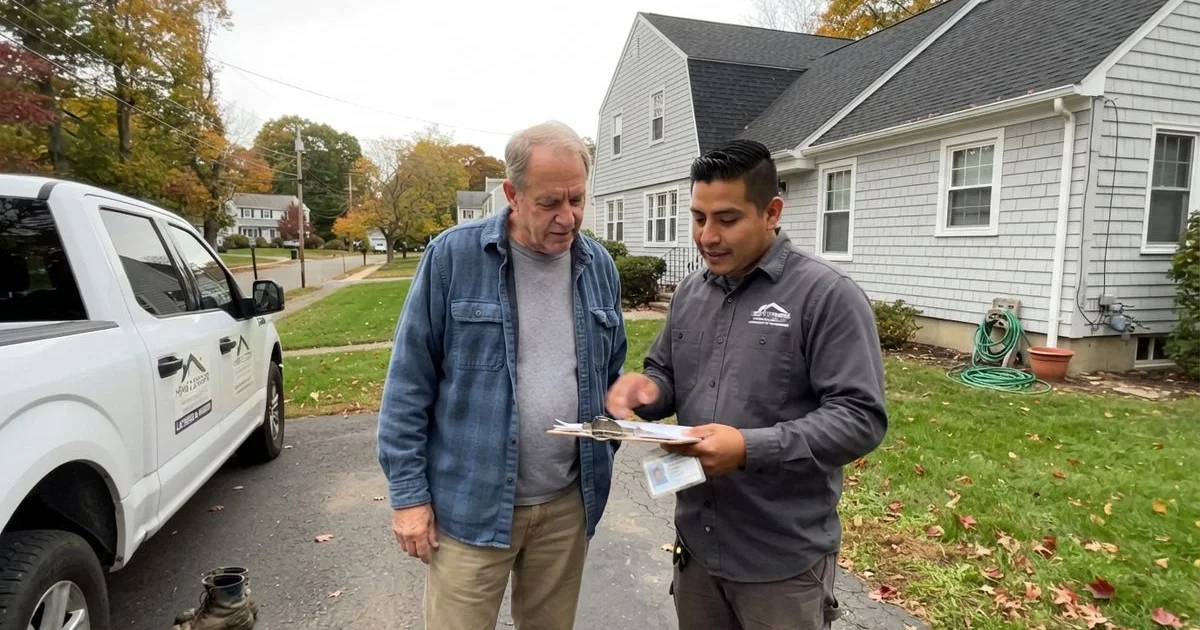
Roofing is one of the more scam-prone corners of home improvement, mostly because the trigger event, storm damage, creates urgency, and urgency is exactly what a bad actor relies on. This is general consumer-protection information, not legal advice; if you believe you have been defrauded, contact Connecticut’s Department of Consumer Protection or local law enforcement.
Why roofing draws scammers
A damaged roof is not optional to fix, insurance claims involve real money moving quickly, and most homeowners cannot inspect their own roof to verify what a contractor tells them. That combination, urgency, money, and an information gap, is a pattern scammers look for across home services generally, and it is especially strong right after a storm rolls through the Hartford Metro area. Starting from a ranked list of local roofing contractors with a track record you can verify is a safer first move than responding to whoever knocks on your door first.
Tactics to watch for
Unsolicited door knocking after a storm. A crew that shows up uninvited claiming they were “already in the neighborhood” and spotted damage on your roof is a classic opening. Legitimate local contractors get plenty of business through reviews and referrals; they do not need to canvas storm-hit blocks.
Manufactured urgency. Pressure to sign today, warnings that your insurance deadline is about to expire, or claims that prices are only good “right now” are sales tactics, not facts. A real deadline exists in writing, in your insurance policy, not in a salesperson’s pitch.
Upfront payment demands. Asking for a full or near-full payment before any work begins is one of the more common patterns behind complaints of a deposit taken and work never started. A reasonable deposit to hold materials and a schedule is normal; the rest should follow a payment schedule tied to completed work.
Insurance check redirection. Be wary of a contractor who asks you to sign your insurance claim check directly over to them, or who tells you not to talk to your adjuster. You are entitled to manage your own claim and get your own copies of everything.
Exaggerated damage claims. A contractor who climbs onto your roof for a “free inspection” and immediately reports severe, urgent damage that no other roofer has flagged is worth a second opinion before you agree to anything, especially if that report is followed immediately by pressure to sign.
No fixed local address. A contractor operating out of a truck with an out-of-state phone number and no verifiable local address is much harder to hold accountable if something goes wrong.
| Warning sign | What it usually means |
|---|---|
| Uninvited door knock right after a storm | Sales-driven, not reputation-driven |
| Demand for full payment upfront | Higher risk of a deposit-and-vanish outcome |
| Pressure to sign the same day | Designed to prevent you from comparing quotes |
| Refusal to provide HIC registration or insurance proof | Likely unlicensed or uninsured |
| Asking you to sign over your insurance check | Removes your control over your own claim |
What to check before you sign anything
Ask for the contractor’s Connecticut Home Improvement Contractor registration number and confirm it is active. Ask for proof of liability insurance and workers’ compensation coverage. Get a written, itemized estimate rather than a verbal number, and read the cancellation terms in the contract; Connecticut law gives homeowners a three-business-day right to cancel most home improvement contracts signed at their residence, so a legitimate contractor’s paperwork should reflect that. A reasonable contractor expects these questions and answers them without hesitation. One who dodges them, changes the subject, or gets impatient is telling you something worth listening to.
If you already have doubts
If you suspect you are dealing with a scam, do not sign anything on the spot. Take the paperwork, tell them you need time to review it, and check the company’s registration and reviews independently. A legitimate contractor will not object to that. If you already signed and something feels wrong, look for the written cancellation notice that should have come with the contract, and act within the window rather than waiting to see how things unfold.
See our methodology for how we evaluate contractors, and browse the full directory for other Hartford Metro home services.
Frequently asked questions
- What is a storm chaser in roofing?
- A storm chaser is a roofing crew that travels from storm to storm, knocking on doors right after hail or high wind to sign homeowners quickly, often before an insurance adjuster has even seen the roof. Some are legitimate traveling crews, but the model attracts a disproportionate share of scams.
- Is it a scam if someone offers a free roof inspection?
- Not automatically. Plenty of legitimate contractors offer free inspections. Be more cautious if the free inspection is immediately followed by claims of severe damage, pressure to sign a contract on the spot, or a request for a large upfront payment.
- What should I do if I already signed with someone who seems off?
- Connecticut's Home Improvement Contractor law gives you a right to cancel certain contracts within three business days of signing, in writing. Check the contract for a cancellation clause and act quickly if something feels wrong.
- How do I report a roofing scam?
- Connecticut's Department of Consumer Protection handles complaints against Home Improvement Contractors. Keep copies of the contract, any payments made, and communications, since these support a complaint or, if needed, a police report.