Warning signs your roof needs attention, and when to call a pro
By Diego Fischer · Updated 2026-08-05
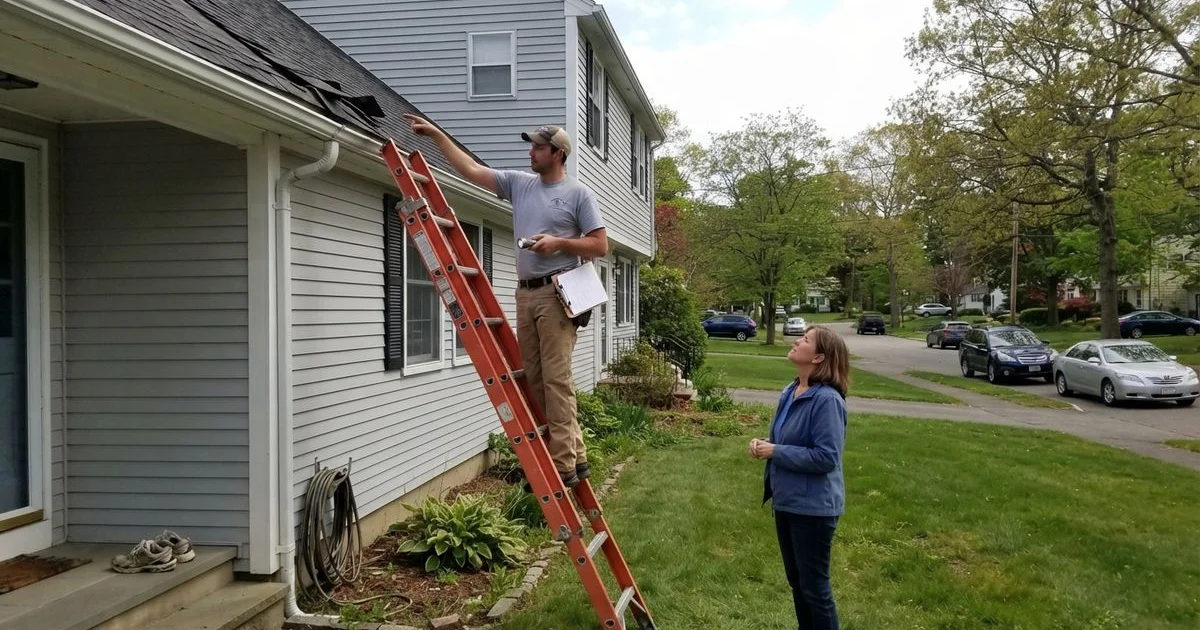
Most roof failures do not happen overnight. They show early signs for months, sometimes years, before a leak actually shows up inside the house. Knowing what to look for from the ground, safely, gives you time to act before a small problem turns into water damage or a full roof replacement becomes urgent instead of planned.
Signs you can spot from the ground
Look at your roof from the driveway or a neighboring upstairs window, ideally with binoculars rather than climbing up. Curling or cupping shingles, where the edges lift away from the roof surface, mean the shingles are aging out and losing their seal. Missing or visibly damaged shingles after a storm are an obvious flag. Dark streaks are usually algae and mostly cosmetic, but a uniformly patchy, dull appearance across large sections often means granule loss, which leaves the underlying asphalt exposed to sun and weather.
Check your gutters and the ground below them for granules that look like coarse, colored sand. Some granule loss is normal as a roof ages, but a heavy, sudden accumulation after a storm is worth a closer look.

Signs from inside the attic or top floor
If you can safely access your attic, a flashlight check twice a year catches problems before they reach the ceiling below. Look for daylight coming through the roof boards, dark or damp stains on the underside of the decking, or a musty smell that suggests trapped moisture. Sagging in the roofline, visible either from the attic or as a dip when viewed from outside, can point to structural stress and should not wait.
Inside the living space, water stains on ceilings or upper walls, peeling paint near the roofline, or a persistent musty odor in an upstairs room are all signs that water is getting past the roofing system somewhere, even if you cannot see where from the ground. The location of an interior stain does not always line up directly with where the water is entering the roof, since it can travel along framing before showing up on a ceiling, which is one more reason a professional inspection matters more than guessing at the source yourself.
Signs tied to age and storms
A roof’s material has a typical service life: asphalt shingles generally last 20 to 25 years in New England’s climate, with architectural shingles and metal roofing lasting longer. If your roof is approaching or past that window and you are seeing any of the signs above, that combination is a stronger reason to get a professional look than either factor alone.
After any storm with hail, high wind, or a fallen branch, a visual check is worth doing even if nothing looks obviously wrong. Some damage, like bruised shingles from hail, is not always visible from the ground and only shows up on a close inspection.
What each sign usually means
| What you notice | Likely urgency |
|---|---|
| A few curling or cupped shingles | Plan an inspection soon, not an emergency |
| Heavy granule loss after a storm | Schedule an inspection within a few weeks |
| Daylight visible through attic boards | Get a professional look promptly |
| Sagging roofline | Contact a contractor right away |
| Active ceiling leak during rain | Treat as urgent; get it assessed as soon as possible |
When to call a professional
Not every sign means an emergency, but any of them is a reason to get a professional set of eyes on the roof rather than guessing from the ground. A roofer can climb safely, check flashing and ventilation up close, and tell you honestly whether you are looking at a minor repair, a bigger repair, or a roof nearing the end of its useful life. A written inspection report with photos, rather than just a verbal summary, gives you something concrete to compare if you decide to get a second opinion or collect quotes from more than one contractor.
See our methodology for how we rank the roofing contractors in this directory, and browse the full directory for Hartford Metro when you are ready to schedule an inspection.
Frequently asked questions
- What is the most common early sign of roof trouble?
- Granule loss is one of the earliest. If your gutters are collecting what looks like coarse sand, or shingles look patchy and dull instead of uniformly textured, the protective granule layer is wearing away.
- Should I climb onto my roof to check it myself?
- It is safer not to. Roofs are uneven, can be slippery, and a fall from even a single-story roof can cause serious injury. Binoculars from the ground, or a look from an upstairs window, tell you most of what you need to know before calling a professional.
- Is a small water stain on my ceiling an emergency?
- Not always, but it should not be ignored. A stain means water has already gotten past the roofing system. It may be a slow, contained leak or the start of something bigger, and only an inspection can tell you which.
- How often should I have my roof professionally inspected?
- Roughly every one to two years for a roof under 15 years old, and annually once it passes that age or after any major storm with hail or high wind.
Related on this site
- Browse roof replacement providers
- What a roof replacement costs in Connecticut and what changes the price
- What to expect during a roof replacement, step by step
- How to choose a roofing contractor: red flags and questions to ask
- How to avoid roofing scams and storm-chaser contractors in Connecticut
- All guides →